DOE prepares conservation map to protect valuable fossil reserves
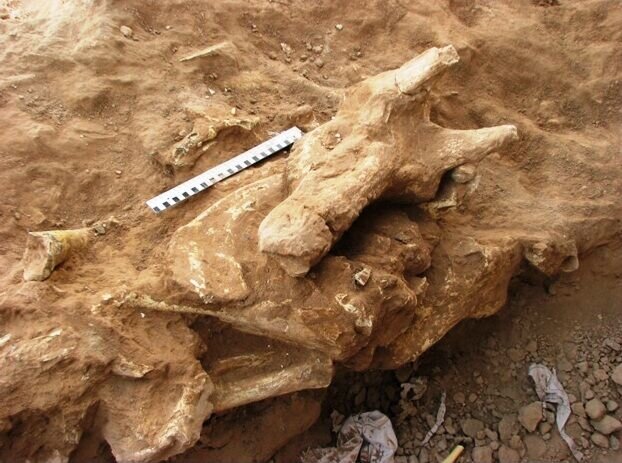
TEHRAN - The Department of Environment has studied, identified and organized a significant portion of the country’s vertebrate paleontological reserves and has prepared a conservation map to protect valuable fossils.
Masoumeh Ghaffari-Shahir, an official with the National Museum of Natural History and Genetic Resources affiliated with the Department of Environment, highlighted the importance of vertebrate fossils as part of Iran’s geological and paleontological heritage.
The rarity of these remains makes accurate identification, specialized conservation and scientific documentation all the more essential, IRNA quoted the official as saying on Thursday.
She added that the DOE’s work in vertebrate paleontology began nearly two decades ago, initially focusing on the city of Maragheh in the northwestern part of the country. In recent years, other areas with paleontological potential have also been incorporated into exploration and research programs, Ghaffari-Shahir highlighted.
Northwestern and western Iran are among the country’s richest regions in terms of vertebrate fossils, she said, noting that fossil remains have been identified, excavated and transferred from the provinces of Ardabil, Lorestan, Kordestan, and Sistan-Baluchestan.
The fossils identified in Ardabil, Lorestan and Kordestan are predominantly estimated to be between seven and eight million years old.
She also pointed to the particular importance of southeastern Iran, especially the Makran coast, for marine vertebrate fossils. An approximately eight-million-year-old whale fossil was excavated in the Chabahar area, she said.
The provinces of Hamadan, Khuzestan and Ilam also have considerable potential for vertebrate fossils. Securing the necessary funding for exploration, excavation and the transfer of specimens from these areas has been included in the Geology Group’s agenda for the current year.
Biodiversity, ecosystem, and endangered species
In February, the DOE elaborated on achievements and measures taken by the administration to protect the biodiversity, ecosystem, and endangered species in the country.
The number of protected areas under the supervision of the DOE has increased from 327 to 330, accounting for 12 percent (19.8 million hectares) of the country’s land area, IRNA quoted Hamid-Reza Zohrabi, an official with the DOE, as saying.
According to the International Union for Conservation of Nature (IUCN) Red List, a total of 213 species are endangered.
The country has so far prepared plans for the preservation of 25 endangered species such as Persian cheetah, zebra, Asiatic black bear, yellow deer, lesser white-fronted geese, white-headed duck, Persian salamander, blind cave fish, and luristanica Sorbus (a rare plant species that is native to Iran). The DOE is preparing thirteen more plans.
The population of prominent herbivorous mammals in the protected areas has increased from 227,000 to more than 240,000, and the number of managed invasive species has grown by 400 percent, covering five species, including crucian carp, nutria, raccoon, and rainbow trout.
Monitoring pests and diseases, and fire outbreaks in Zagros habitats is another measure taken by the DOE, which has led to the identification of Hyrcanian boxwood pest, the awkward silkworm moth in Gilan province, and the wood-eating pest of Aras in Khorasan Razavi province.
Given the importance of protecting biodiversity and genetic resources, the DOE is planning to prepare a plan to combat plant pests and pathogens as the main threat to the country’s unique ecosystem.
To protect caves, the DOE has developed cave classification guidelines and plans for the conservation and sustainable use of the caves in the country. The number of caves with a conservation grade has increased from 7 to 41, indicating an increase of 490 percent.
Leave a Comment